
Have you ever received a phone call saying you won a lottery, but the person says you just need to scan a QR code to get the cash? Or perhaps you received a message saying your electricity bill is pending and your power will be cut unless you pay immediately?
In Tamil Nadu and across India, online payment apps such as Google Pay, PhonePe, Paytm and BHIM make everyday payments quick. Scammers also use these systems to steal money. This is commonly described as UPI fraud.
If you or someone you know loses money to an online scam, do not panic. This guide explains the immediate reporting steps and how authorities and banks may try to freeze transferred funds.

What is a UPI fraud?
UPI stands for Unified Payments Interface. It lets you send money from one bank account to another using a mobile phone.
A UPI fraud occurs when someone tricks a person into sending money or obtains information that allows an unauthorised transaction.
Common methods include:
- Fake customer care: A person searches online for customer support and calls a number operated by a scammer. The caller may ask the victim to download a screen-sharing app and then obtain payment information.
- The QR-code trick: A supposed buyer says they will send money if the seller scans a QR code. Remember that a QR code is generally scanned to make a payment, not to receive one.
- Fake messages and links: An urgent SMS claims that a bank account will be blocked and directs the recipient to a false page that collects account information.
Why speed matters
The period immediately after an online payment fraud is sometimes called the golden hour. Reporting quickly may improve the possibility that a bank or investigating authority can trace and place a hold on the transferred funds.
Money may move through several bank accounts before it is withdrawn. A prompt report gives the relevant institutions an earlier opportunity to respond.

Step-by-step guide: reporting quickly and requesting a freeze
Many people experience online fraud. If it happens, focus on the available reporting steps.
Step 1: Dial 1930 immediately
If you believe you have been cheated in an online financial transaction, call 1930, the National Cyber Crime Helpline.
Be ready to provide your name and phone number, the name of your bank, and the transaction ID shown in the payment record.
The helpline can enter the complaint into the financial cyber-fraud reporting system so that the relevant banks can review the transfer. A hold may be possible if the funds remain traceable and available.
If the helpline is busy, continue with the bank and online reporting steps without delay.
Step 2: Contact your bank and UPI app
Call the official customer-care number printed on your card or published in your bank's app or website. Report the fraudulent transaction and ask the bank to secure the affected account, card and payment access as appropriate.
Open the UPI app used for the payment and use its Help or Support section to report the transaction as fraud. This provides the payment service with a record of the complaint.
Step 3: File a complaint on the cybercrime portal
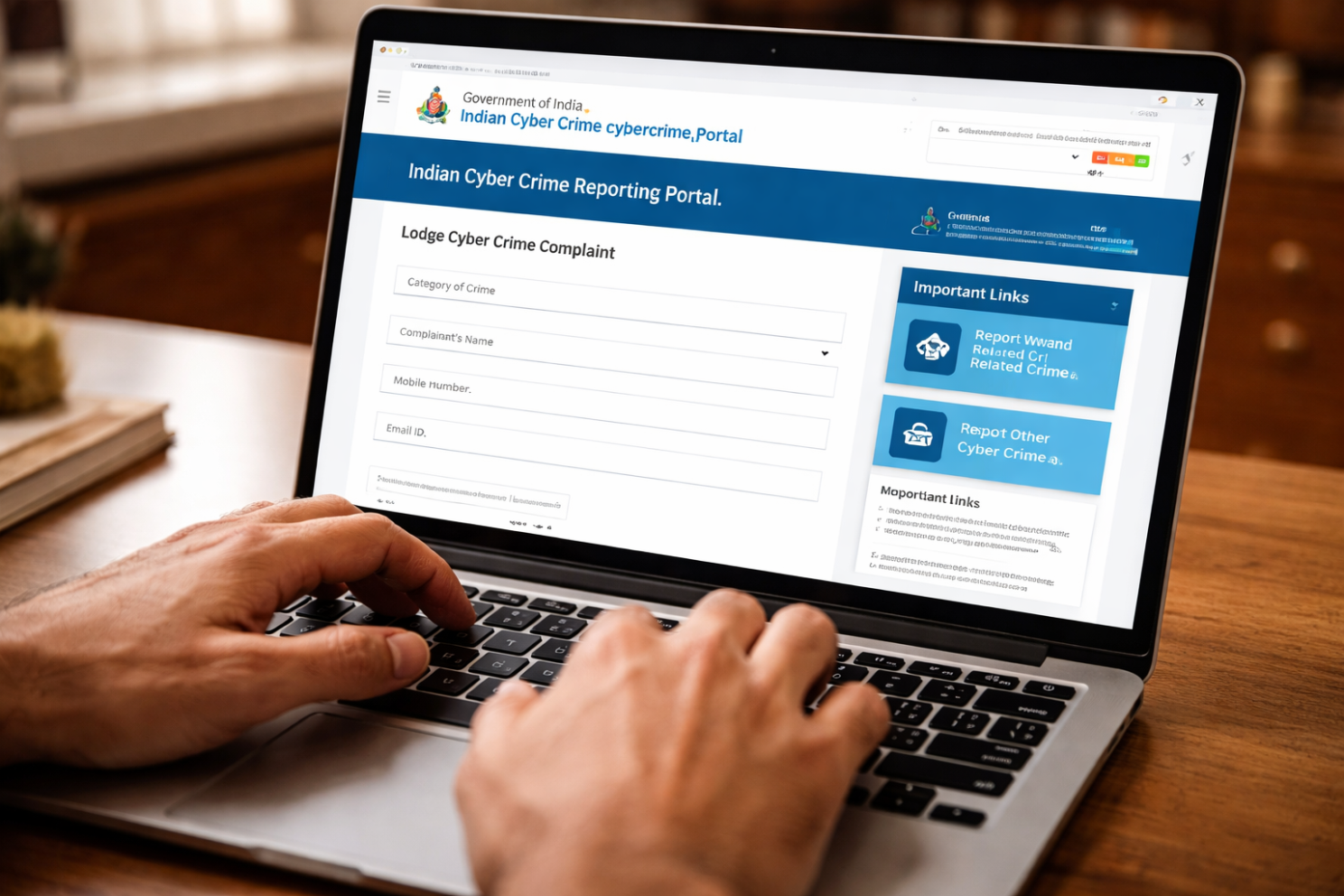
Call 1930 for an immediate report, and also make a written complaint through the official portal at cybercrime.gov.in.
- Select the option to report cybercrime.
- Sign in using the available mobile-number verification process.
- Provide the date, time, amount and a clear account of what happened.
- Upload relevant evidence, such as messages, numbers used by the caller, transaction records and screenshots.
- Save the acknowledgement number so that you can refer to and track the complaint.
Step 4: Give a written complaint to your bank
Contact or visit your bank promptly and provide a clear written complaint. Attach the relevant bank statement or transaction record and the cybercrime acknowledgement number.
Ask the bank to explain the steps and documents required under its current fraud-reporting process. The treatment of a transaction depends on the facts, how it was authorised and the applicable banking rules.
Step 5: Approach the police
The bank or other authority may ask for a police complaint or FIR. Take the transaction record, communication evidence and cybercrime acknowledgement to the appropriate local police or cybercrime police station.
How can funds be frozen?
A bank may place a hold on funds in an account after receiving an authorised fraud report. If the money has moved to other accounts, investigators and participating banks may attempt to trace the transfers and place further holds where the law and available balance permit.
Returning frozen funds may require investigation, bank procedures, consent from the relevant authority or a court order. A freeze does not itself guarantee recovery, and the process and timing vary from case to case.

Illustrative example in Tamil Nadu
Consider a student in Chennai who sends an advance payment for a second-hand laptop and then loses contact with the seller. The student immediately calls 1930, reports the transaction to the bank and files an online complaint. Acting quickly gives the authorities and banks an earlier opportunity to trace the funds. This is an illustration only; the result in any real matter depends on its facts and the response of the relevant institutions.
What never to do online
- Never share an OTP: Banks, police and government agencies do not need your OTP to receive a complaint.
- Never enter a UPI PIN to receive money: A PIN authorises a payment from your account.
- Never click an unknown urgent link: Open the bank or service's official app or type its known web address yourself.
- Never install an unknown remote-access app: Screen-sharing and remote-control apps can expose sensitive information and account access.
Legal assistance in this area
IFF Law Attorney handles litigation and non-litigation matters in Tamil Nadu. Depending on the facts and acceptance of an engagement, the firm may assist with reviewing records, preparing correspondence or notices, and explaining the procedure for seeking appropriate relief.
Businesses may also enquire about retainership support for contracts, payment issues and recurring legal work. The scope of any service is discussed and agreed separately.

Final thoughts
Save 1930 and remember the official portal at cybercrime.gov.in. Prompt reporting and complete records can help banks and investigating authorities respond.
Do not feel ashamed to ask for help. Share the reporting steps with family members and people who may be less familiar with online-payment risks.
Frequently asked questions
Can money be recovered after a UPI scam?
Recovery may be possible, especially when the transaction is reported quickly, but it is not guaranteed. It depends on the movement and availability of the funds, the facts of the transaction and the steps taken by the relevant institutions.
What is the National Cyber Crime Helpline number?
The helpline for reporting online financial fraud in India is 1930.
Is there a charge to file a complaint on the official cybercrime portal?
The government portal does not charge a fee for filing the complaint.
What does freezing an account mean?
A freeze or hold restricts transactions in an account or over specified funds while the report is examined. The precise scope depends on the instruction issued to the bank.
How long does recovery take?
There is no fixed period. Investigation, inter-bank communication and any required court or police process can affect the timing.
Can IFF Law Attorney assist after the emergency reporting steps?
The firm can consider an enquiry about the legal paperwork, correspondence with institutions and the available court process. Whether the firm can act and what steps are appropriate depend on the records and circumstances.